Vitamin C Content |
||
This Website is part of a scientific project in which the objective is to test the vitamin C content of different fruits and vegatables. This test will be done by running a titration using DC PIP solution. This website aims to outline the project week by week from the planning stage to anaylsing the results. Vitamin C is an important vitamin. Adults are recommended to have a daily intake of 40mg a day. This is about equivilant to eating one grapefruit or three apples. It is formed in fruits as a chemical realeased when the fruits cell wall breaks down during ripening. Vitamin C helps protect the body. One way it does this is by working as an antioxidant protecting against free radicals. Free radicals are made when chemical bonds are broken. In the body this happens when food is turned into energy. Free radicals steal an electron from the closest stable molecule which itself then becomes a free radical. If there are no antioxidants present this reaction will continue and may even cause damage to the structure of your DNA. Vitamin C also helps the body produce collagen used to heal wounds. The bodies immune system is helped by vitamin C as it aids the absorbtion of iron. Along with these benefits it is used within the body to repair and maintain bones, cartilage and teeth. It is even suggested vitamin C may help prevent cancer. Medical net online at: http://www.medicinenet.com/script/main/art.asp?articlekey=88519&page=2 Vitamin C is found in many fruit and vegetable jucies including orange juice broccoli juice and lemon juice. Grapefruit has around 6mg of vitamin C per 100g. Pineapple has around 15mg of vitamin C per 100g Apple has around 11mg of vitamin C per 100g Tomato has around 19mg of vitamin C per 100g Not getting enough vitamin C may lead to a deficiency known as scurvy. This is a very severe deficiency that has symptoms of anemia, weakness, gum disease and skin problems. Scurvy was a very common disease amoung pirates and sailors a long time ago when fruits could not be stored long enough during thier journey. This meant they had little or no vitamin C for maybe months at a time and so they ended up with scurvy.
DCPIP (2,6-dichlorophenolindophenol) is a blue coloured chemical used as a redox dye. In this experiment the DCPIP reacts with the acid in vitamin C (Ascorbic acid). The acid reduces the DCPIP which is shown by the colour change. The equation for vitamin C reacting with DCPIP is : C6H8O6 + C12H7NCl2O2 ——→ C6H6O6 + C12H9NCl2O2
The benfits of vitamin C were researched so when the results were obtained they could draw on this not only to carry out statistical test but to also find out which of the juices would most benefit our health. See below the structure of vitamin C (ascorbic acid) 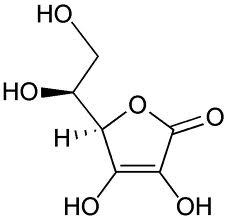 |
The fruit juices being using are: grapefruit, pineapple, apple and tomato. The null hypothosis: There will be no difference of vitamin C content in grapefruit juice than any of the others.  |
|
